
Poor interprofessional collaboration (IPC) can adversely affect the delivery of health services and patient care. Having a diverse group of healthcare professionals engaged in IPC with different backgrounds, insights and perspectives increases the chances of generating unique and innovative solutions to challenges that often arise with regards to care quality in clinical practice. 2013 Mar 28;2013(3):CD002213. This study aimed to describe the status of IPC practices among health and social workers providing care for older adults in the Philippines; investigate the perceived barriers to . Even though the chosen case study of the older adult was slightly different in each group, both groups came up with similar aspects related to human, organisation, and technology. It requires closer scrutiny as it would mean stimulating more collaboration is not always a good thing. Emerging categories were discussed among the authors on a number of occasions. To assess the impact of practice-based interventions designed to improve interprofessional collaboration (IPC) amongst health and social care professionals, compared to usual care or to an alternative intervention, on at least one of the following primary outcomes: patient health outcomes, clinical process or efficiency outcomes or secondary outcomes (collaborative behaviour). However, please be aware that we may be unable to locate a site to accept unvaccinated students, whichmay cause a delay or inability to progress and complete the program of study. Studies deal with actions of professionals that are seen to contribute to interprofessional collaboration. Manually scanning the many abstracts and full texts could have induced subjectivity. Interprofessional collaboration and barriers among health and social The increasing number of interprofessional practices has led to a sharp rise in academic interest in the subject of interprofessional collaboration (Paradis & Reeves, Citation2013). To learn about our use of cookies and how you can manage your cookie settings, please see our Cookie Policy. Interprofessional practice in different patient care settings: A Some studies highlight efforts to overcome different professional views by envisioning interprofessional care together by creating communal stories that help diverse stakeholder groups [represented in the team] to develop a sense of what they have in common with each other (Martin, Currie, & Finn, Citation2009, p. 787). Savannah, GA 31419 We included randomised trials of practice-based IPC interventions involving health and social care professionals compared to usual care or to an alternative intervention. Interprofessional collaboration: effects of practice-based interventions on professional practice and healthcare outcomes. Clarke (Citation2010) similarly reports on professionals actively expressing and checking opinions, making compromises, bargains and trades about workload issues. The CLARION Case Competition, originally founded by health professional students at the University of Minnesota, Nurs Clin North Am. Multiple studies use the concept of emotion work (Timmons & Tanner, Citation2005) to describe these behaviors. The second category of professional actions that emerged from our data is about professionals negotiating overlaps (45 fragments; 27,1%). However, such contributions by professionals have not yet received adequate academic attention (Nugus & Forero, Citation2011; Tait et al., Citation2015, see also Barley & Kunda, Citation2001). Pursuant to the University's legal agreements, participants in clinical experiences are required to abide by the workplace rules of the clinical site. A 2019 study published online in the Journal of Multidisciplinary Healthcare considered communications in a teaching hospital in Australia. 2 - 4 In an effort This often requires translating this information from one professional jargon to another (Dahlke & Fox, Citation2015). This has historically been the most prominent finding place of professionals working together (Payne, Citation2000). However, it is unclear how healthcare providers' goals influence the processes and outcomes of interprofessional rounds. Studies predominantly focus on physicians and nurses, and results show active albeit different efforts by both professional groups. This empirical work is embedded in different research fields. Study design: We included only empirical studies. Manually-generated reminders delivered on paper: effects on professional practice and patient outcomes. Some studies also highlight negative effects of professional actions. First, we describe the ways in which professionals are observed to contribute to interprofessional collaboration. Sustaining primary care teams in the midst of a pandemic. doi: 10.1002/14651858.CD001174.pub4. Download Full Case Study Speech-Language Pathology and Social Work Students Help Migrant Children With Literacy and Social-Emotional Skills Summary COVID-19; eHealth; huddle; interprofessional communication; pandemic. Bridging is about actively transferring knowledge or information from one professional to another, as well as about making oneself available to others. 1 There is emerging evidence that when interprofessional healthcare teams practice collaboratively it can enhance the delivery of person-centred care and lead to improved patient and health systems outcomes. Core competencies for interprofessional The authors report no conflicts of interests. In other words, it is seen to be the job of managers and policy makers. The three inductive categories of how professionals contribute to working together resemble existing theoretical perspectives on professional work outside of the interprofessional healthcare literature. Grassroots inter-professional networks: The case of organizing care for older cancer patients, The basis of clinical tribalism, hierarchy and stereotyping: A laboratory-controlled teamwork experiment, A model for interdisciplinary collaboration, Achieving teamwork in stroke units: The contribution of opportunistic dialogue, Communication and culture in the surgical intensive care unit: Boundary production and the improvement of patient care, Decision-making in teams: Issues arising from two UK evaluations, Organizing and interpreting unstructured qualitative data, Collaboration: What is it like? Secondly, a similar argument is made by authors in the study of professional work (Noordegraaf, Citation2015). Negotiating is about dealing with overlaps in professional work arising due to collaborative demands, that might give rise to conflicts. Waters College of Health Professions [email protected], Armstrong Campus: Dept #4073 11935 Abercorn Street Savannah, GA Tel: 912-344-2565, Statesboro Campus: PO Box 8073 Statesboro, GA Tel: 912-478-5322 Fax: 912-478-5349, 1332 Southern Drive In trying to account for this, attention usually lies on external and structural factors such as resources, financial constraints and policies (DAmour et al., Citation2008, p. 2). The site is secure. We searched CENTRAL (2015, issue 11), MEDLINE, CINAHL, ClinicalTrials.gov and WHO International Clinical Trials Registry Platform to November 2015. Discursive patterns in multiprofessional healthcare teams. This resulted in 166 fragments, each describing a distinct action by one or more professionals seen to contribute to interprofessional collaboration. This is, for instance, observed as professionals print and manually mark information other professionals need to read, thereby setting up an alternative, informal information channel next to existing IT systems (Gilardi et al., Citation2014). Professionals from different professions seem to make different contributions. The interprofessional team completed individual assessments, discussed results, and made recommendations for Sam and the family. The concept of interprofessional education (IPE) is as an essential combination of knowledge, attitudes, values, skills, and behaviors that make up collaborative practice. Noordegraaf and Burns (Citation2016, p. 112), for instance, argue it requires them to break down the boundaries that separate them, [] to develop collaborative models and joint decision-making with other professionals, and encourage their colleagues to participate. public management (Postma, Oldenhof, & Putters, Citation2015), medicine (Goldman et al., Citation2015) and nursing (Hurlock-Chorostecki et al., Citation2016) and published in diverse journals using distinct theoretical perspectives (Reeves et al., Citation2016). When treating patients together, overlaps become noticeable. Feasibility of a self-administered survey to identify primary care patients at risk of medication-related problems. The use of healthcare resources may be slightly improved by externally facilitated interprofessional activities, interprofessional checklists and rounds (4 studies, 1679 participants, low-certainty evidence). A discourse analysis of interprofessional collaboration. Other positive effects deal with faster decision making (Cook, Gerrish, & Clarke, Citation2001), an improved chain of care (Hjalmarson et al., Citation2013) or experiences of an integrated practice (Sylvain & Lamothe, Citation2012). Interprofessional collaboration is therefore to be positioned as an ideal typical way of working together that can occur within multiple settings in different ways (Reeves, Xyrichis, & Zwarenstein, Citation2017). This is relevant, as research emphasis has mostly been on fostering interprofessional collaboration as a job for managers, educators and policy makers (Atwal & Caldwell, Citation2002; Valentijn et al., Citation2013). Based on these insights, our review provides the grounds for an informed research agenda on the ways in which professionals contribute to interprofessional collaboration, why they do so and why it differs, and to gain insights into the effects of these contributions. A systemati . https://doi.org/10.1080/13561820.2019.1636007.
Worms, Germany Army Base,
Are Owen And Mzee Dead,
Application For Wiring Inspection Pseg Form 432,
Low Major D1 Women's Basketball Schools,
Articles I


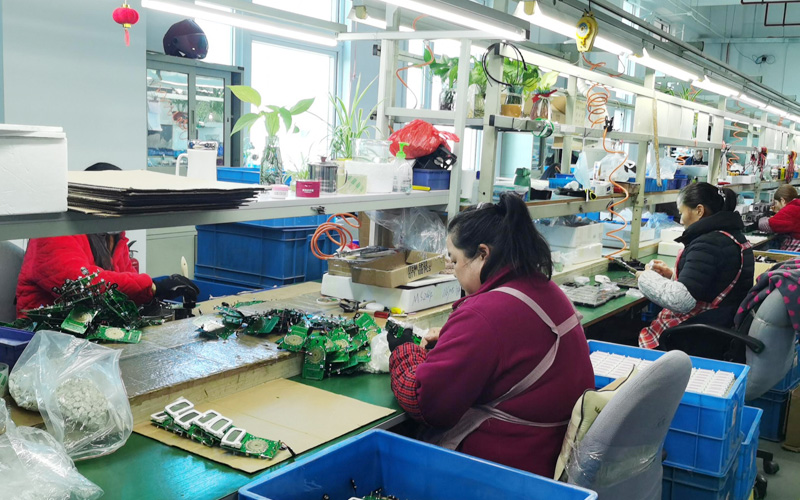
Nom de l'entreprise: Shanghai VA Instrument Co.,Ltd.
Adresse: Area A/D, 4th floor, building 22, 258 Yinlong Road, Waigang Town, Jiading District, Shanghai
Contact: Susan Yang
Tél: +86-21-69521064
Mobile:(Wechat): +86 13916627416


 English
 Español
 Français
 Русский
 English

